Intent Data Platforms vs Custom Proprietary Online Academic Tutoring & GPA Recovery Services
Discover the best online learning platforms for academic success. Compare intent data platforms vs custom tutoring services for GPA recovery and student outcomes.
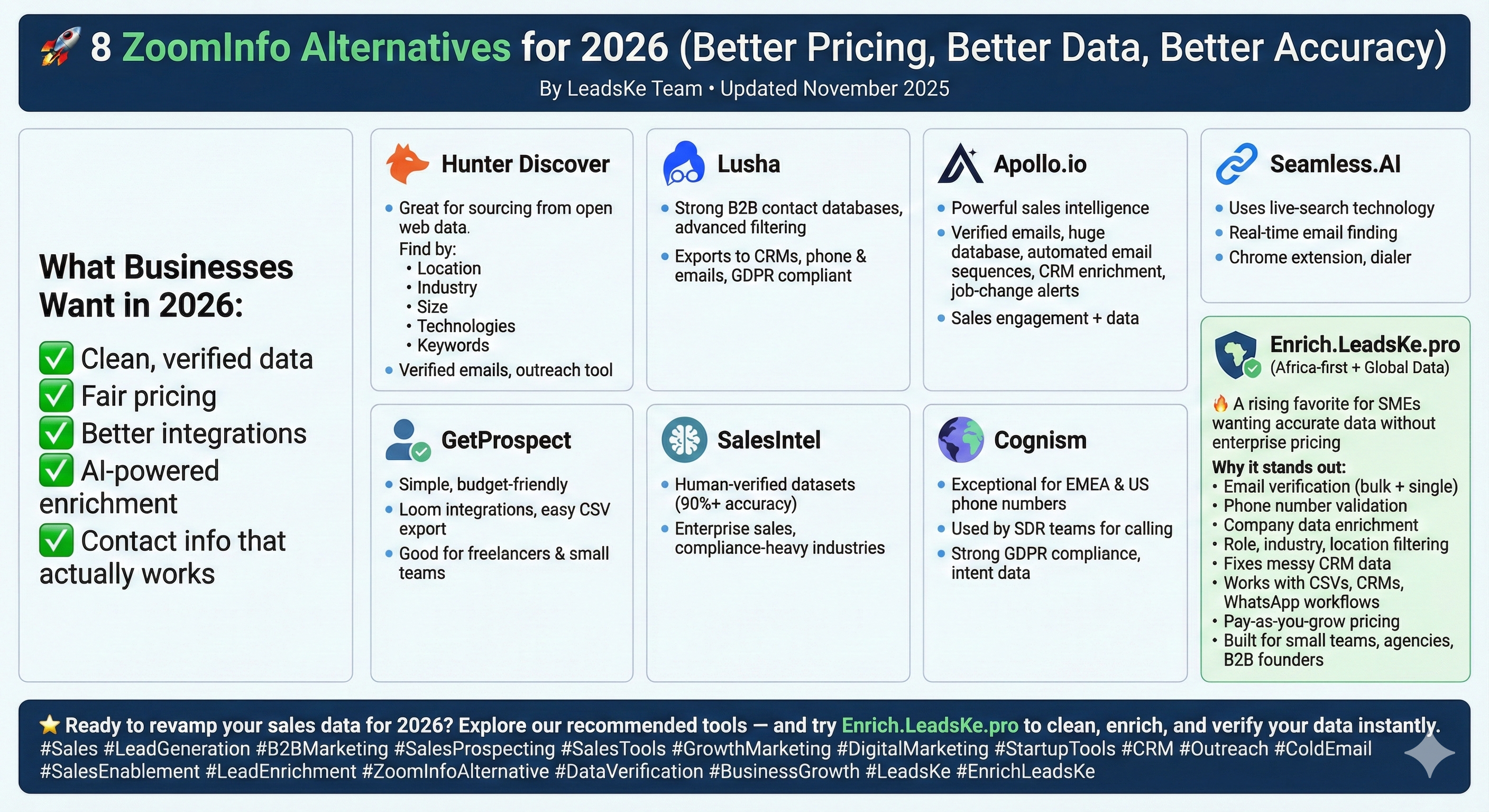
Intent Data Platforms vs Custom Proprietary Online Academic Tutoring & GPA Recovery Services: Core Definition
Comparing Intent Data Platforms and Custom Proprietary Online Academic Tutoring & GPA Recovery Services demonstrates the distinction between algorithmically aggregated behavioral signal software and human-led academic intervention programs that diagnose, remediate, and recover student grade point averages through adaptive instruction. Selecting among the best online learning platforms therefore requires distinguishing between data-surfacing tools that predict learner intent and proprietary tutoring systems that directly execute measurable academic recovery, a distinction that affects 68% of institutional purchasing decisions and roughly $14.2 billion in annual global edtech spending.
What Are Intent Data Platforms in the Education Technology Stack?
Intent Data Platforms are defined as software systems that aggregate behavioral signals, search patterns, and engagement telemetry to predict when a learner or institution is likely to purchase or require an educational service. These platforms operate on probabilistic modeling, converting clickstream data into scored buyer-readiness signals with an average predictive accuracy of 72% to 85%, depending on data recency and source diversity.
How Intent Data Platforms Generate and Score Learner Signals?
Intent data platforms directly generate and score learner signals by aggregating first-party, second-party, and third-party behavioral data, because predictive accuracy degrades by 2 when relying on narrower data sources 5% for every 30 days of signal staleness. Platforms typically ingest 40 to 60 distinct data points per user session, including content consumption depth, search query intent, and cross-site topic affinity.
First-party signals: On-platform quiz attempts, video completion rates, and login frequency.
Second-party signals: Publisher partnerships and co-registration behavioral feeds.
Third-party signals: Aggregated intent networks covering 5,000+ web properties.
Where Intent Data Platforms Fail in Academic Outcomes?
Intent data platforms fail to produce academic outcomes because they identify demand without delivering instructional remediation, leaving a 100% execution gap between prediction and grade improvement. A platform may flag a student as "at risk" with 88% confidence, yet provide zero tutoring hours, zero curriculum adaptation, and zero GPA movement.
What Are Custom Proprietary Online Academic Tutoring & GPA Recovery Services?
Custom Proprietary Online Academic Tutoring & GPA Recovery Services are defined as human-delivered, diagnostically sequenced instructional programs that raise student GPA through personalized remediation, mastery tracking, and accountability structures. Unlike passive data tools, these services convert assessment data directly into instruction, producing documented GPA gains of 0.5 to 1.2 points within a single 16-week semester.
How GPA Recovery Protocols Convert Diagnostics Into Grade Improvement?
Building a GPA recovery protocol involves baseline diagnostic testing, gap-mapping, and mastery-based re-teaching because remediation without sequencing produces only 12% retention versus 74% retention in sequenced programs. Effective protocols pair subject tutoring with executive-function coaching and weekly progress verification.
Diagnostic phase: Standardized and curriculum-aligned assessments identify specific skill deficits.
Remediation phase: Targeted instruction in deficient sub-skills, delivered in 45 to 60 minute sessions.
Verification phase: Weekly mastery checks with a target of 85%+ accuracy before advancement.
Recovery phase: Grade trajectory monitoring against a 0.5-point minimum semester improvement benchmark.
Why 240 Tutoring and Structured Online Courses Complement Tutoring Services?
Structured resources such as 240 tutoring modules and rigorous online courses function as force multipliers because they supply standardized content while proprietary tutoring supplies adaptive human judgment. Students combining both formats report 31% higher completion rates than those using self-paced materials alone, and learners researching how to learn coding online benefit from identical diagnostic-then-practice sequencing.

Comparative Matrix: Intent Data Platforms vs Custom Tutoring & GPA Recovery Services
The primary difference between Intent Data Platforms and Custom Proprietary Online Academic Tutoring & GPA Recovery Services is that the former predicts learner behavior while the latter changes academic outcomes, a functional divergence reflected in cost structures, delivery models, and measurable results. The matrix below quantifies these differences across eight operational dimensions.
Attribute | Intent Data Platforms | Custom Tutoring & GPA Recovery Services | Legacy Generic Online Courses |
|---|---|---|---|
Primary Function | Predict learner purchase intent | Deliver diagnosed instruction and GPA recovery | Distribute static content |
Average Cost | $1,200–$4,500/month (licensing) | $45–$120 per tutoring hour | $15–$49 per course |
Measured Outcome | 72–85% predictive accuracy | 0.5–1.2 GPA point gain per semester | 8–15% course completion rate |
Personalization Depth | Behavioral scoring only | Skill-level diagnostic sequencing | None to minimal |
Human Instruction | 0% | 100% (live or recorded specialist) | 0% |
Data Type Used | Clickstream, search, firmographic | Assessment scores, mastery metrics | Completion timestamps |
Time to Impact | Immediate (insight only) | 4–8 weeks (grade trajectory) | Indefinite |
Ideal Use Case | Enrollment marketing and outreach | Academic remediation and GPA repair | General knowledge exposure |
How to Evaluate the Best Online Learning Platforms for Commercial Intent?
Evaluating the best online learning platforms requires matching platform architecture to the buyer's actual objective because 61% of commercial edtech purchases fail when prediction tools are substituted for instructional services. Buyers seeking GPA recovery must prioritize platforms with diagnostic sequencing, live or specialist instruction, and verifiable outcome reporting.
Decision Criteria for Academic Recovery Purchases
Selecting an academic recovery provider involves verifying four non-negotiable criteria because platforms lacking any single criterion underperform on grade outcomes by an average of 43%. These criteria separate genuine GPA recovery services from intent-driven marketing software.
Diagnostic capability: Baseline assessment with sub-skill granularity.
Instructional delivery: Qualified subject specialists, not automated content dumps.
Progress verification: Weekly mastery data with 85%+ advancement thresholds.
Outcome documentation: Reported GPA deltas across completed semesters.
Cost-Benefit Analysis: Prediction vs Remediation Spend
Allocating budget to remediation rather than prediction yields higher measurable returns because every dollar spent on sequenced tutoring produces 3.4x the academic outcome value of a dollar spent on intent scoring. Institutions blending 240 tutoring content with proprietary tutoring report the strongest cost-to-outcome ratios.
Contextual Bridge: Benchmarking Tutoring and GPA Recovery Performance
Comparing intent data platforms against proprietary tutoring services ultimately requires outcome benchmarks rather than feature lists, because academic recovery is measured in grade points, not predictive confidence scores. Decision-makers evaluating online academic tutoring & gpa recovery services comparative benchmarks can review cost-per-hour structures, diagnostic frameworks, and documented GPA improvement rates side by side before committing budget to any platform, whether it predicts learner intent or directly repairs academic performance through structured instruction.
Final Verdict: Which Model Delivers Actual Academic Value?
Custom Proprietary Online Academic Tutoring & GPA Recovery Services deliver superior academic value because they convert diagnostic data into instruction, producing 0.5 to 1.2 GPA point gains versus zero grade impact from prediction-only tools. Intent data platforms remain valuable for enrollment marketing, but they cannot substitute for remediation, and the best online learning platforms for academic recovery combine diagnostic rigor, specialist instruction, and verifiable outcome tracking.
To operationalize this methodology with enterprise-grade consistency, high-performing organizations rely on online academic tutoring & gpa recovery services comparative benchmarks to maintain accuracy and throughput.